|
||||||
|
Kinect System requirements
You need to read the system requirements on microsoft.com (http://www.microsoft.com/en-us/kinectforwindows/) we are currently using the "Kinect for Windows" sensor (NOT v2) and hence those are the system requirements you need to look up (search on "Kinect for Windows v1.8" or go to currently http://www.microsoft.com/en-us/download/details.aspx?id=40278)
Kinect Sensor for Windows (not V.2)
Search or currently go to http://msdn.microsoft.com/en-us/library/hh855355.aspx
Kinect SW setup
Visual Studio .NET, C#, and Kinect -
STEP 1 Download latest Visual Studio with C# support from Microsoft Dreamspark (you must make an account, and get verified as student, easy but, follow directions)
STEP 2: read Microsoft Kinect Getting Started (for version 1.8) ( this will reference how to a) dowload SDK, runtime tools and setup your sensor)
Kinect Developer Site (and SW)
Developer site (note we will use kinect for windows and 1.8 version of sdk and runtime)
NOTE: currently using pervious version v 1.8 of kinect for windows sensor (not v2).
STEP 2.1 So download latest SDK 1.8 that supports that sensor
STEP 2.2 Download the corresponding runtime tools
STEP 2.3 Setup your sensor
STEP 2.4 Download the corresponding developer toolkit (this includes nice apps like Kinect Studio, again version 1.8). Make sure that you have installed the Kinect studio --this is a useful app. You will bring up a Kinect Developer Toolkit browser by going to via the start menu: Kinect for Windows SDK 1.8 -> Developer Toolkit Browser v1.8 (i.e. this might lead to the folder location of C:\ProgramData\Microsoft\Windows\Start Menu\Programs\Kinect for Windows SDK v1.8)
STEP 4: optional dowload the appropriate Microsoft Speech Platform SDK for your Kinect device (version 11 currently see URL http://www.microsoft.com/en-us/download/confirmation.aspx?id=27226) if you want to do any Speech API using Kinect.
STEP 5: Play with Kinect studio
STEP 6: Try to create using book or online tutorial a beginning Kinect application ( we will be doing in C#).
To create a C# application you need to have the following
A Sudden Noisy Stopping Of The Breath This Word Can Be Spelt In Two Ways Hot 2021 Access
Holding one's breath or breathing into a paper bag to increase carbon dioxide levels.
This variation emerged later, during the 17th century. Scholars at the time mistakenly believed the condition was related to a "cough," so they altered the spelling to include "cough" at the end. Despite the change in letters, the pronunciation remained identical to "hiccup." Today, this spelling is considered a secondary variant and is seen more frequently in British English, though even there, "hiccup" is becoming the dominant choice. Cultural Cures and Curiosities Holding one's breath or breathing into a paper
Drinking a glass of water upside down or swallowing a teaspoon of granulated sugar. Despite the change in letters, the pronunciation remained
A hiccup is essentially a reflex arc. It begins with an irritation of the nerves that control the diaphragm—the large muscle at the base of the lungs. When this muscle spasms, it forces a quick intake of breath that is abruptly stopped by the closure of the glottis. This sequence happens in a fraction of a second, resulting in the rhythmic, jerky movement we all recognize. Common triggers include: Eating or drinking too quickly Consuming carbonated beverages Sudden excitement or emotional stress Abrupt changes in temperature The Linguistic Divide: Hiccup vs. Hiccough It begins with an irritation of the nerves
The evolution of these two spellings is a classic case of "folk etymology," where a word’s spelling is changed based on a mistaken belief about its origin.
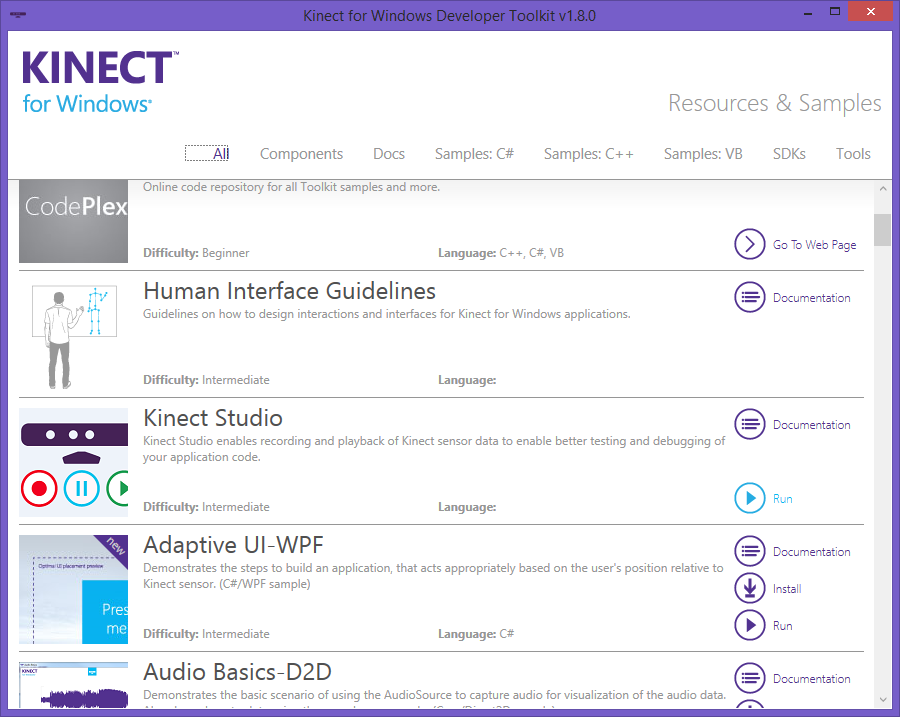
Kinect Studio
This tool lets you record data on your Kinect Studio associated with a Kinect application that is running and then save as an .XED file and play this back anytime you want through the same application as long as you have the same sensor running with it (this is because it needs the same calibration information stored with sensor).