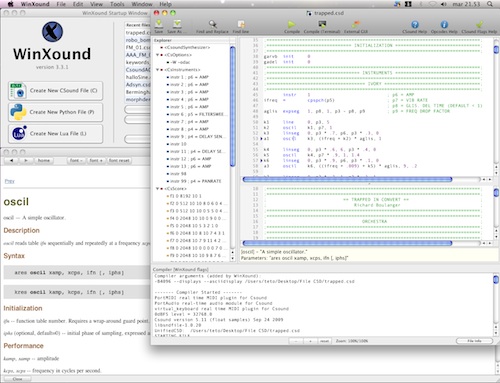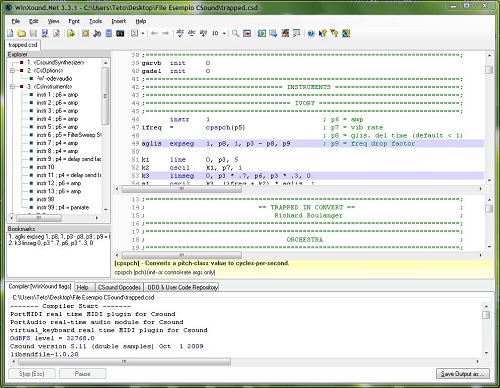
A free and open source editor for CSound
with Python and Lua support.
Since the mid-1980s, independent cinema in Bangladesh has grown from "artisanal" short films to mature, full-length features that compete in international festivals.
: The transition from 35mm film to digital technology around 2000 allowed for more creative freedom and a departure from the "studio system" of the Bangladesh Film Development Corporation (BFDC). Movie Reviews: Critically Acclaimed Gems
: Independent filmmakers frequently tackle pressing social and political issues, including nation-building, corruption, and marginalized voices.
: Historically, some commercial films have been labeled "low-grade" or "B-grade" by middle-class audiences due to perceived technical flaws, such as shaky camera work, poor dialogue, or reliance on plagiarized plots.
Bangladeshi cinema is currently experiencing a dynamic shift, moving away from the formulaic "commercial blockbusters" of Dhallywood and toward a vibrant independent scene that prioritizes artistic quality and cultural relevance. This evolution is marked by a clear distinction between mainstream "grade" cinema and the growing "off-beat" or independent movement that has begun to represent the national identity on a global stage. Understanding Bangladeshi "Grade" Cinema
: These films traditionally dominate the box office, characterized by melodramatic storylines, catchy soundtracks, and elaborate dance routines.
WinXound 3.4.1 - Binary (29/03/2015 - 1021K)
WinXound 3.4.1 - Sources (29/03/2015 - 5463K)
WinXound 3.4.0 - Binary (03/11/2012 - 1598K)
WinXound 3.4.0 - Sources - Xcode 4.5.0 (03/11/2012 - 1927K)
WinXound 3.4.0 - Binary 32 bit(23/07/2013 - 2613K)
WinXound 3.4.0 - Sources (23/07/2013 - 3121K)
THE SOFTWARE IS PROVIDED "AS IS", WITHOUT WARRANTY OF ANY KIND, EXPRESS OR IMPLIED, INCLUDING BUT NOT LIMITED TO THE WARRANTIES OF MERCHANTABILITY, FITNESS FOR A PARTICULAR PURPOSE AND NONINFRINGEMENT. IN NO EVENT SHALL THE AUTHORS OR COPYRIGHT HOLDERS BE LIABLE FOR ANY CLAIM, DAMAGES OR OTHER LIABILITY, WHETHER IN AN ACTION OF CONTRACT, TORT OR OTHERWISE, ARISING FROM, OUT OF OR IN CONNECTION WITH THE SOFTWARE OR THE USE OR OTHER DEALINGS IN THE SOFTWARE.
Since the mid-1980s, independent cinema in Bangladesh has grown from "artisanal" short films to mature, full-length features that compete in international festivals.
: The transition from 35mm film to digital technology around 2000 allowed for more creative freedom and a departure from the "studio system" of the Bangladesh Film Development Corporation (BFDC). Movie Reviews: Critically Acclaimed Gems
: Independent filmmakers frequently tackle pressing social and political issues, including nation-building, corruption, and marginalized voices.
: Historically, some commercial films have been labeled "low-grade" or "B-grade" by middle-class audiences due to perceived technical flaws, such as shaky camera work, poor dialogue, or reliance on plagiarized plots.
Bangladeshi cinema is currently experiencing a dynamic shift, moving away from the formulaic "commercial blockbusters" of Dhallywood and toward a vibrant independent scene that prioritizes artistic quality and cultural relevance. This evolution is marked by a clear distinction between mainstream "grade" cinema and the growing "off-beat" or independent movement that has begun to represent the national identity on a global stage. Understanding Bangladeshi "Grade" Cinema
: These films traditionally dominate the box office, characterized by melodramatic storylines, catchy soundtracks, and elaborate dance routines.
WinXound for Windows
WinXound for OsX
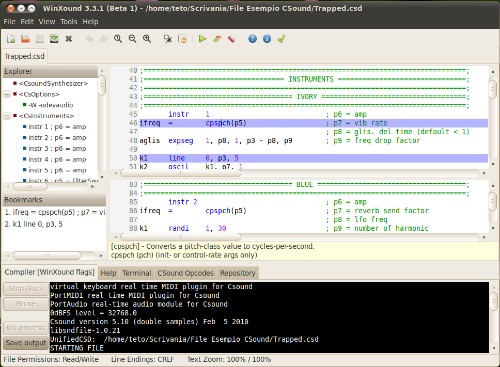
WinXound for Linux
Source Code Since the mid-1980s, independent cinema in Bangladesh has
Credits
Many thanks for suggestions and debugging help to Roberto Doati, Gabriel Maldonado, Mark Jamerson, Andreas Bergsland, Oeyvind Brandtsegg, Francesco Biasiol, Giorgio Klauer, Paolo Girol, Francesco Porta, Eric Dexter, Menno Knevel, Joseph Alford, Panos Katergiathis, James Mobberley, Fabio Macelloni, Giuseppe Silvi, Maurizio Goina, Andrés Cabrera, Peiman Khosravi, Rory Walsh, Luis Jure and Giovanni Doro.
: Historically, some commercial films have been labeled