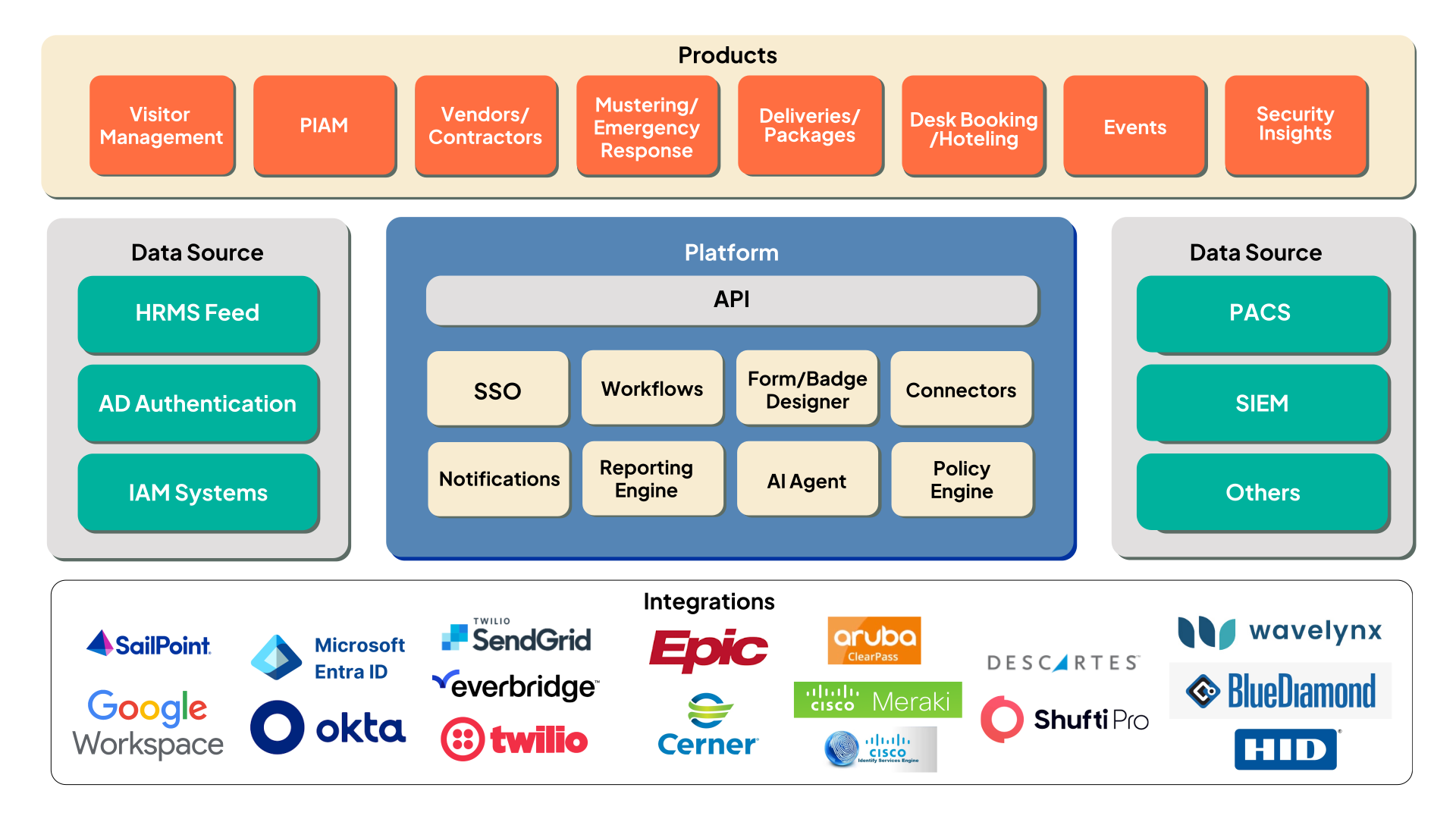
A Scalable and Secure Framework
A cloud-native, API-driven architecture enabling unified visitor, identity, and access control management across enterprise environments.
Many organizations backup localized camera feeds to remote cloud instances. An identifier like exmairu01 may represent the designated target server. If a network bridge fails or a security breach occurs, these indexed raw video files occasionally leak into publicly indexable directories on search engines. 3. Remote Proctoring and Virtual Meetings
Continuous loop recording generates thousands of small file blocks.
If you use cloud platforms like Amazon Web Services or Google Cloud to store your security logs, routinely check that your buckets are set to "Private."
Motion-activated triggers prepend unique camera IDs and localized time codes to the file name. 2. Cloud Server Backups
Ensure any webcam software uploading to the cloud utilizes encrypted transfer protocols (HTTPS/SFTP).
Misconfigured AWS S3 buckets or open FTP servers often let search engine crawlers index private security feeds.
Modern security cameras do not simply stream video; they rely on massive automated storage routines. Software suites like Synology Surveillance Station or open-source alternatives like ZoneMinder create hyper-specific, coded file names to prevent overlapping.
Universal Plug and Play can inadvertently open your local camera network to the public internet.
Change your IP camera and router credentials immediately upon installation.
In remote work and educational environments, desktop recording software or virtual proctoring tools record students and employees. These files are typically stored in enterprise cloud arrays utilizing coded machine names for the endpoints being recorded. ⚠️ Privacy and Cybersecurity Risks
Enhancing security and access control across corporate, healthcare, education, government, and other sectors with an AI-powered visitor management solution for intelligent identity verification and risk mitigation.

Accelerate workplace security by managing employee, contractor, and visitor access.

Adhere to compliance and security by regulating access to sensitive areas of everyone.

Empower tenants across a wide range of locations to assign and regulate access.

Oversee patient visits, appointment visits, employees and temporary check-ins.

Safeguard students with visitor screening w.r.t parents and guardians.

Track and control access to critical infrastructure for clear audit trails and reports.

Visitor Management and Access Governance for employees, contractors and vendors.

Maintain strict access control and real-time location tracking of the confidential data.
Optimize automated onboarding workflows and centralized access governance to enforce role-based policies, ensuring easy identity provisioning, real-time access control, and regulatory compliance across enterprise systems.
Provision role-based access making sure that new employees have appropriate permissions.
Adjust access levels whenever employees switch roles or departments, accordingly.
Enable employees to request additional access with approvals managed via workflows.
Conduct periodic user access reviews to validate compliance with security policies.
Deactivate user accounts and revoke system access immediately upon termination.


Trusted in countries across the world.
Speaks multiple languages.
Processed visitors in total.
Integrate Splan Visitor Management & PIAM for Unified Identity Governance

Access Control Systems

Adaptable Deployments

Modern Access

Total Identity

Uninterrupted Connectivity

Extra Security Layer

Extended Patient Care

Mustering and Evacuation

API Communication
Many organizations backup localized camera feeds to remote cloud instances. An identifier like exmairu01 may represent the designated target server. If a network bridge fails or a security breach occurs, these indexed raw video files occasionally leak into publicly indexable directories on search engines. 3. Remote Proctoring and Virtual Meetings
Continuous loop recording generates thousands of small file blocks.
If you use cloud platforms like Amazon Web Services or Google Cloud to store your security logs, routinely check that your buckets are set to "Private."
Motion-activated triggers prepend unique camera IDs and localized time codes to the file name. 2. Cloud Server Backups
Ensure any webcam software uploading to the cloud utilizes encrypted transfer protocols (HTTPS/SFTP).
Misconfigured AWS S3 buckets or open FTP servers often let search engine crawlers index private security feeds.
Modern security cameras do not simply stream video; they rely on massive automated storage routines. Software suites like Synology Surveillance Station or open-source alternatives like ZoneMinder create hyper-specific, coded file names to prevent overlapping.
Universal Plug and Play can inadvertently open your local camera network to the public internet.
Change your IP camera and router credentials immediately upon installation.
In remote work and educational environments, desktop recording software or virtual proctoring tools record students and employees. These files are typically stored in enterprise cloud arrays utilizing coded machine names for the endpoints being recorded. ⚠️ Privacy and Cybersecurity Risks