ASComm IoT
GE IoT Software Driver Example Application
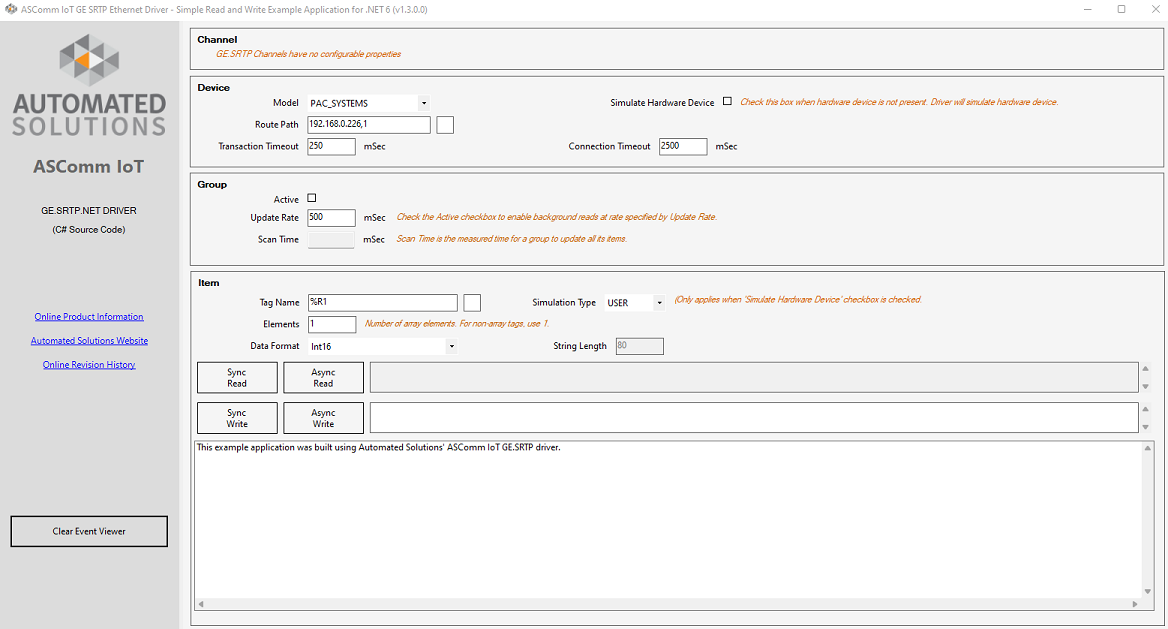
Simple Read and Write
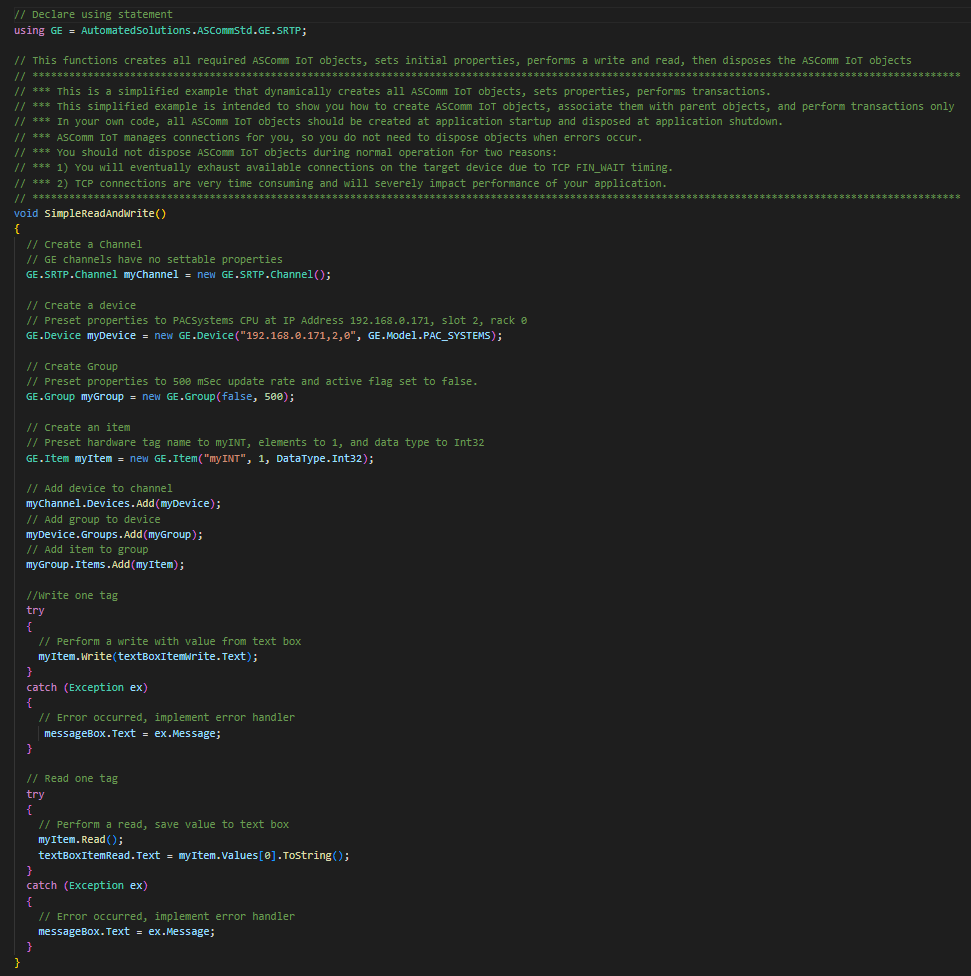
GE IoT Software Driver Code Example
ASComm IoT GE SRTP Ethernet Driver is a communications library that enables your .NET 10/9/8 applications to read and write registers on PACSystems RX3i, RX7i, Rxi, Series 90-30, and VersaMax controllers without PLC program modifications, OPC or third party libraries.
PACSystems symbolic register naming supported.
Use Visual Basic, C#, C++, and ASP.NET to create HMI, SCADA, data logging, and Industrial IoT applications targeting Windows, Linux and Android.
Powerful pre-built example applications with VB and C# source code included in development package.
Runtime-free for qualified applications
Never store unencrypted wallet.dat files on cloud services or public web servers. Use an encrypted external drive or a dedicated hardware wallet for long-term storage.
To prevent your wallet from appearing in an "index of" search results, follow these security best practices:
If you are a server administrator, disable directory listing (e.g., using Options -Indexes in Apache) to prevent sensitive files from being indexed by search engines. What to Do If You Find an Old Wallet File
Always set a complex passphrase within Bitcoin Core. Avoid simple passwords that are susceptible to dictionary or GPU-based cracking .
The phrase typically refers to a specialized search query (often called a Google dork) used to find publicly exposed directories on web servers that contain sensitive wallet.dat files. These files are the default database format for the Bitcoin Core client and contain the private keys required to access a user's cryptocurrency funds. Understanding the Vulnerability
Even encrypted files are at risk. Attackers use tools to perform Padding Oracle Attacks or brute-force passwords if the encryption was weakened by older software vulnerabilities.
If you have found a legitimate wallet.dat file from your own past (e.g., on an old hard drive), you can recover it using these steps: How To Find Lost Bitcoins: The Ultimate Guide - Changelly
Web servers often use "directory indexing" to show a list of files if no index page (like index.html ) is present. When users inadvertently upload their Bitcoin Core data directories to a public-facing server or cloud storage like Dropbox, these files become searchable.
Even without the password, the file may reveal transaction histories and associated public addresses. How to Secure Your Wallet Data
Never store unencrypted wallet.dat files on cloud services or public web servers. Use an encrypted external drive or a dedicated hardware wallet for long-term storage.
To prevent your wallet from appearing in an "index of" search results, follow these security best practices:
If you are a server administrator, disable directory listing (e.g., using Options -Indexes in Apache) to prevent sensitive files from being indexed by search engines. What to Do If You Find an Old Wallet File
Always set a complex passphrase within Bitcoin Core. Avoid simple passwords that are susceptible to dictionary or GPU-based cracking .
The phrase typically refers to a specialized search query (often called a Google dork) used to find publicly exposed directories on web servers that contain sensitive wallet.dat files. These files are the default database format for the Bitcoin Core client and contain the private keys required to access a user's cryptocurrency funds. Understanding the Vulnerability
Even encrypted files are at risk. Attackers use tools to perform Padding Oracle Attacks or brute-force passwords if the encryption was weakened by older software vulnerabilities.
If you have found a legitimate wallet.dat file from your own past (e.g., on an old hard drive), you can recover it using these steps: How To Find Lost Bitcoins: The Ultimate Guide - Changelly
Web servers often use "directory indexing" to show a list of files if no index page (like index.html ) is present. When users inadvertently upload their Bitcoin Core data directories to a public-facing server or cloud storage like Dropbox, these files become searchable.
Even without the password, the file may reveal transaction histories and associated public addresses. How to Secure Your Wallet Data